
In 1972, Irwin J. Polk published an article in Skating, the USFSA's official magazine, predicting what skating competitions would be like in 1991. It describes a skater doing figures with lights affixed to her skates and an overhead camera recording every move. The figures are scored by a computer based on the video. Skaters with… Continue reading 1991: Skating Odyssey
Did snow skates work?

As far as I can tell, the answer is no. The snow skates I'm thinking of have metal blades an inch wide or a bit more. They're about as long as the skater's foot and tie on to the shoes. A good example is the one I found in an antique shop. In that post,… Continue reading Did snow skates work?
Did Swedish immigrants to the Midwest use bone skates?
Two facts are clear: People were still using bone skates in Sweden in the nineteenth century (see pp. 143–145 of my Skates Made of Bone).Many people immigrated from Sweden to the midwestern United States in the nineteenth century. This combination of facts had led me to wonder whether Swedish immigrants to the Midwest used bone… Continue reading Did Swedish immigrants to the Midwest use bone skates?
The Paulsen brothers

Axel Paulsen made history in 1882, when he performed the jump that bears his name at a competition in Vienna. What's less well known is that his brother was also there. In fact, they skated together. Demeter Diamantidi wrote a nice article previewing the competitors for the Allgemeine Sport-Zeitung. It was published the day before… Continue reading The Paulsen brothers
Kemp’s bicycle skates

On January 1, 1876, the Sporting Gazette ran a notice about a new type of skate invented by one Mr. Kemp. These skates, which he called "bicycle skates," featured a large front wheel and a small rear wheel. They seem to have been intended for skating on roads normally traversed by bicycles. "The Bicycle Skate,"… Continue reading Kemp’s bicycle skates
Women in the European Championships

Frank Gillett, The Graphic, March 7, 1908, 325. Image copyright the British Library Board, courtesy of the British Newspaper Archive. Dorothy Greenhough-Smith's Wikipedia page notes that "[s]he never competed at the European Figure Skating Championship because the ladies event was not added to the program until 1930." That's true as far as it goes—Hines's list… Continue reading Women in the European Championships
Baseball before We Knew It
Baseball before We Knew It by David Block, 2005. I just read David Block's Baseball before We Knew It. As might be inferred from its title, this book is not about skating. It's still great. I found a lot of parallels to my work on skating history in it. It covers some of the same… Continue reading Baseball before We Knew It
What is a scribe, and where do I get one?
A scribe is a giant compass that draws circles on the ice. You can use one to draw your circles before skating your figures or to check your work after you've done them. They're no longer common in stores, but they are still available. Scott Irvine makes and sells custom scribes. Figure 8 Boutique has… Continue reading What is a scribe, and where do I get one?
The Curtis star
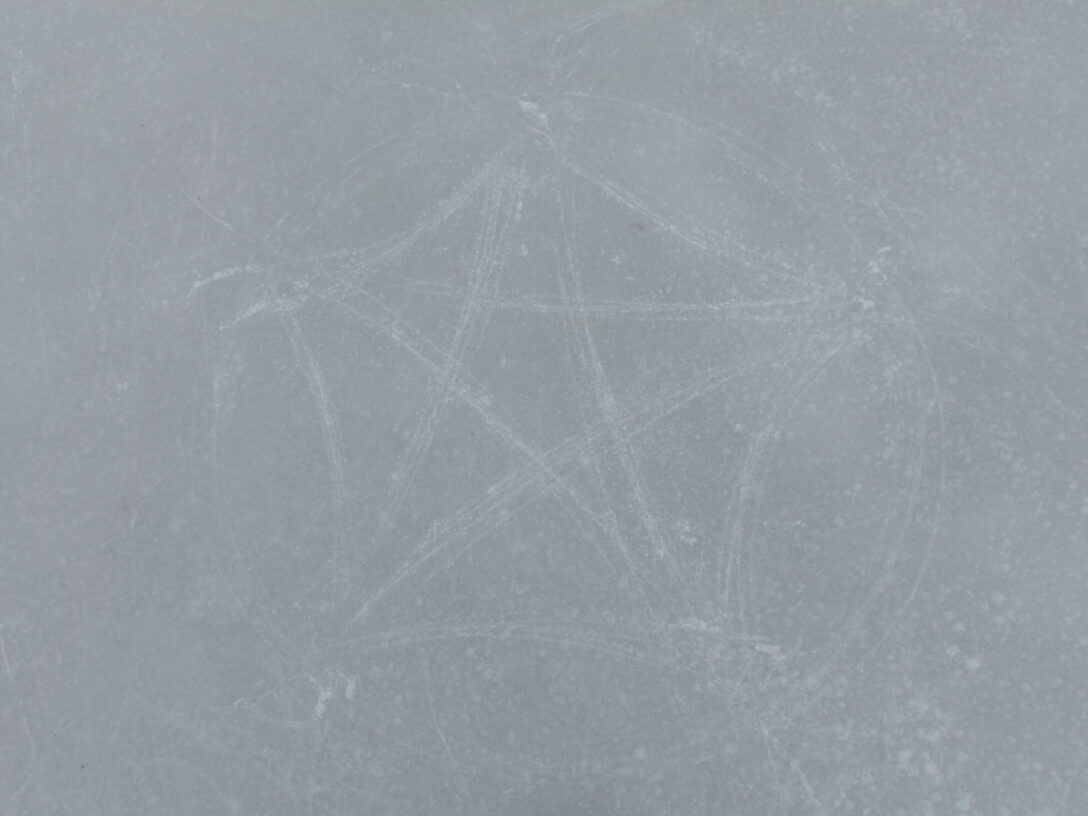
The Curtis star, retraced a few times. The Curtis star was a specialty of Callie Curtis, American champion from 1969 to 1874. Instructions for skating it are given in The Skaters Text-Book (with a diagram that seems backwards to me). In the third edition of A System of Figure Skating, Vandervell and Witham quote the… Continue reading The Curtis star
The myth of skating history
My new article, "The myth of skating history: Building elitism into a sport" has been published in a special issue of Leisure Sciences on myths and mythmaking. It's about the development of figure skating's origin story—that story about medieval Scandinavians traveling and hunting on bone skates that's at the beginning of pretty much every book… Continue reading The myth of skating history