
In the first printed book on metallurgy, the Pirotechnia, Vannoccio Biringuccio describes a process for purifying iron used "outside Christendom": They say that the file it, knead it with a certain meal, make little cakes of it, and feed these to geese. They collect the dung of these geese when they wish, shrink it with… Continue reading Goose poop in the smithy
New publications
I haven't been writing much here lately, but some new things are up on Schaatshistorie.nl: Two videos from my new Evolution of Skating series: Bone skates and Archetype skates. Those links are to the English versions, they are also in Dutch here and there."Whither bone skates research?", a short article summarizing the state of research… Continue reading New publications
Fluted skates
Early skating authors had a lot of bad things to say about deep hollows on ice skates. I have said nothing of those skates whose surfaces are grooved, and are commonly called fluted skates, because I think their construction is so bad, that they are not fit to be used; in fact, they are so… Continue reading Fluted skates
English skating and national identity
My article on English skating just came out! Here's the citation: Thurber, B.A. 2021. "The English Style: Figure Skating, Gender, and National Identity." Sport History Review. Advance online publication. https://doi.org/10.1123/shr.2020-0023. Abstract During the second half of the nineteenth century, a unique style of figure skating developed in Great Britain. This style emphasized long, flowing glides… Continue reading English skating and national identity
Bone skates and keywords
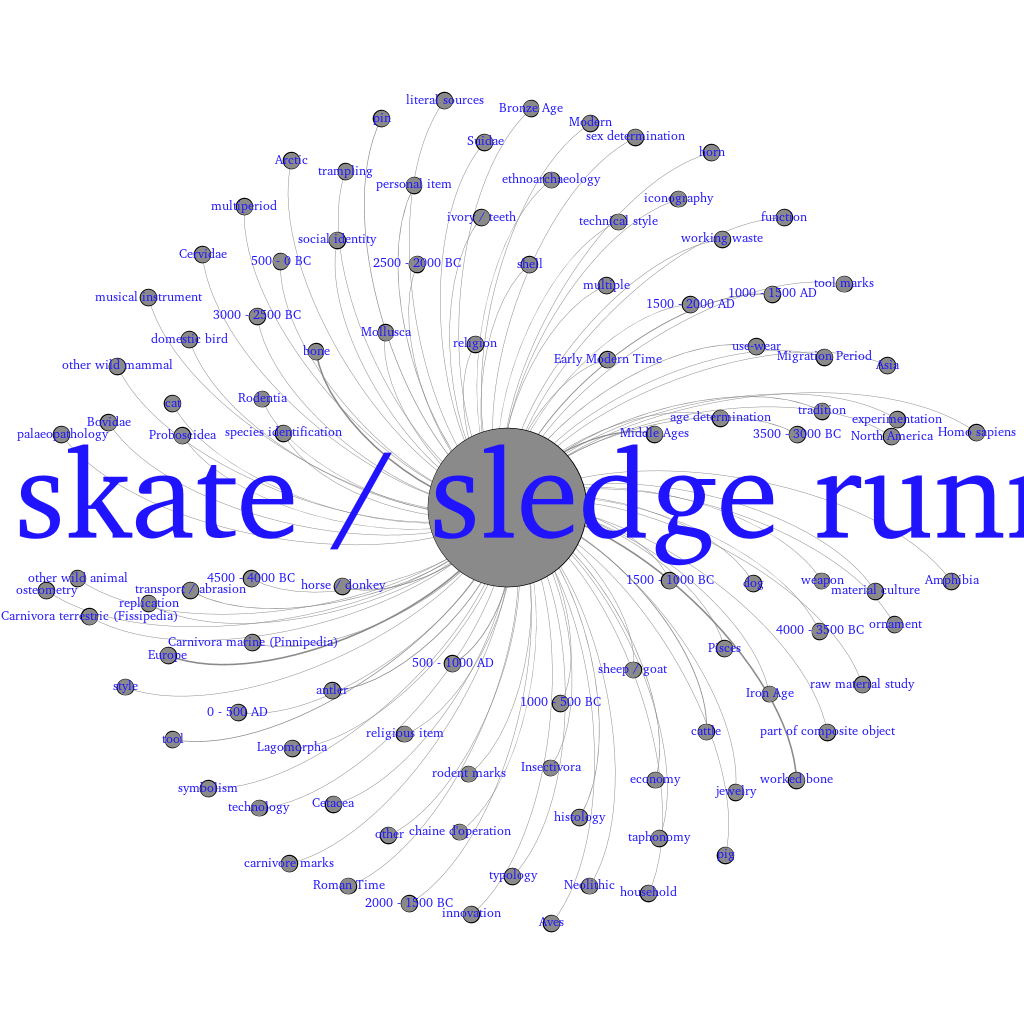
I used Gephi to make a graph of all the keywords connected to bone skates in the WBRG reference database. Graph generated using Gephi. Most of the results aren't very surprising. Of course bone skates are strongly linked to worked bone, bone, Europe, and the Middle Ages (1000–1500). More surprising are the links to North… Continue reading Bone skates and keywords
Bones at a Crossroads

There is no skating in this book. I'm posting it anyway because My name is on the cover.It's officially out today. You can read it for free at Sidestone.com.
Skates for roller figures
This post is about equipment for figures on roller skates. It focuses on skates for circle figures (the big ones), not loops (the small ones)—many roller skaters have separate skates for figures and loops. Roller skates have five components that you can select. I'll organize this post from the top down. Skate sets Skaters Oasis… Continue reading Skates for roller figures
Arthur MacGregor
Arthur MacGregor is one of the heroes of bone skates studies. He proved that bone skates really were skates in 1975 by making a couple of pairs and skating on them. The next year, he published a really great review article. His dissertation Skeletal Materials presented the bigger picture. And then his book Bone, Antler,… Continue reading Arthur MacGregor
Leif Erikson in St. Paul

Last week I visited the statue of Leif Erikson in St. Paul, MN. Leif is known for discovering North America around 1000 CE. His exploits are described in Grœnlendinga saga (The Saga of the Greenlanders) and Eiriks saga rauða (The Saga of Erik the Red). The Leif Erikson statue in St. Paul. I was interested… Continue reading Leif Erikson in St. Paul
Robert Jones’s skates
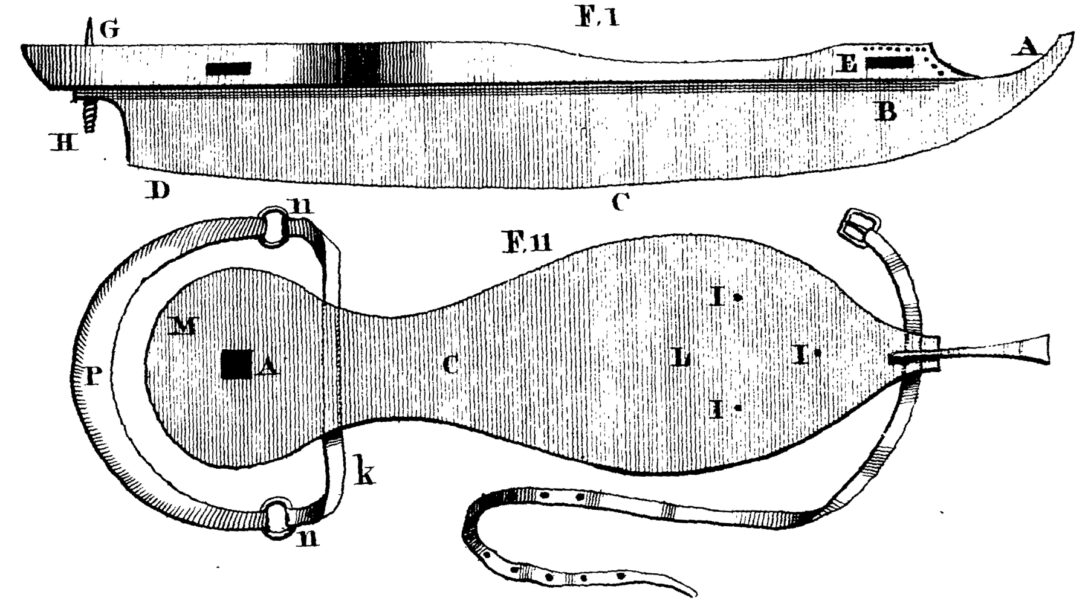
In his 1772 Treatise on Skating, Robert Jones describes what he considers the ideal skate in detail, including measurements: Figure 1 (top) represents a skate, made after the English fashion, with some improvements; the proportions are as follows: Let the distance from the point of the fender, A, to the toe hook, which is shewn… Continue reading Robert Jones’s skates